Restaurants
Don't let the evening end at two percent
The next round gets ordered with a phone in hand. When it dies, the table asks for the bill.
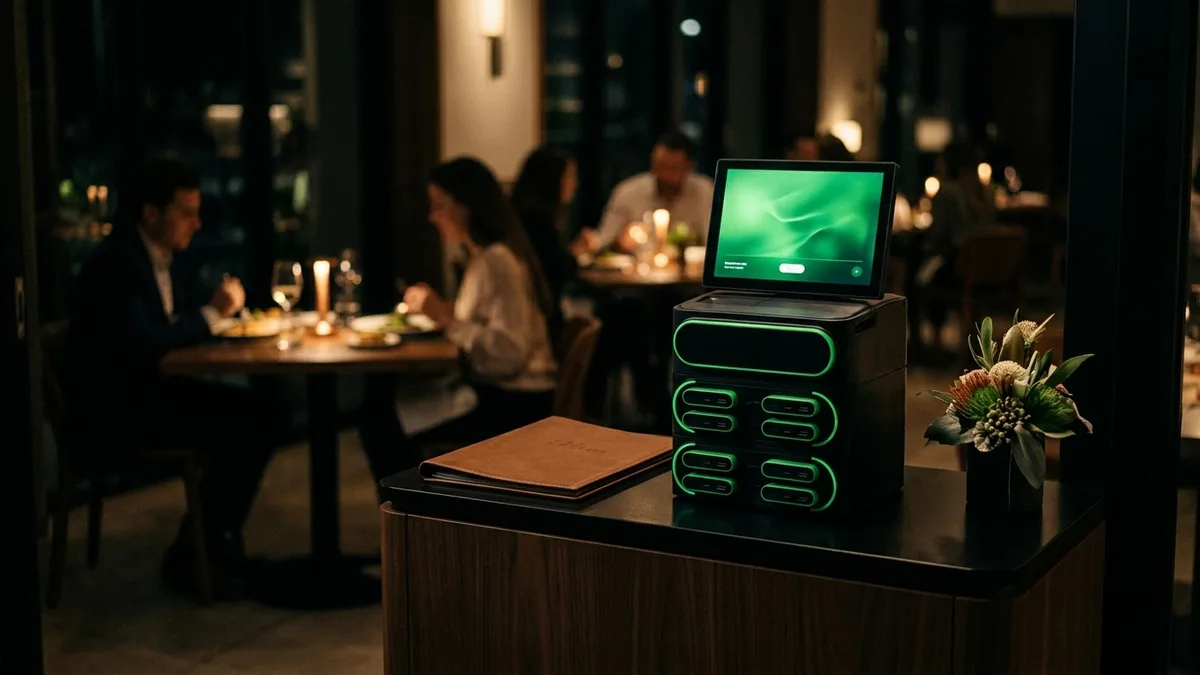
In hospitality, the customer's battery decides when the visit ends. A Chargo station at the bar or near the entrance lets them keep paying, keep scanning the menu and keep posting where they are, without leaving. It runs on self-service, so your team never touches it.
Key takeaways
- In hospitality the battery, not the dessert menu, sets the real end of a visit.
- QR menus and phone payments made the handset part of the service.
- The station belongs at the bar or near the entrance, where customers already pass.
- It's self-service — no server has to manage a rental or hand out cables.
- Smaller venues are well covered by the countertop format.
The problem
The battery dies exactly when the table was about to order another round or pay.
A station at the bar or the entrance sorts out charging without the table getting up and without your staff lending out the venue's charger.
Benefits
What changes in your business
Longer tables
With battery, the table stays. Without it, the group starts checking the time and asks for the bill.
QR menus stop being a liability
If the menu lives behind a QR code, a dead phone is a customer who can't order. The station closes that gap.
Your staff stop lending chargers
No more cable behind the bar that never comes back, and no more socket taken up by a customer's phone.
Small footprint
In tighter venues the countertop format fits in about the space of a till.
Use cases
- Long dinners where a group stays well past what they planned.
- Venues with QR menus, where the phone is essential just to order.
- Late-night bars, where people arrive having already drained the battery elsewhere.
- Bars with a wait, so customers don't leave while queueing for a table.
Why a battery is a hospitality problem
The phone came to the table through the front door: it reads the menu, settles the bill, splits it between friends, books the ride home and photographs the plate. Every one of those assumes the handset is on.
When it isn't, the effect is immediate and silent. Nobody says "I'm leaving because my phone died" — they just ask for the bill sooner. And the venue loses whatever was going to be ordered next.
Where to put it
Near the bar or the entrance. Those are the two points everyone passes, and where the customer is already standing and free to deal with something. Putting it at the back of the room wastes it — the people who need it never see it.
Which format suits a restaurant
If you have a bar and a handful of tables, the countertop format is enough. If you run a large room, a terrace or heavy evening turnover, a floor format holds up better — it absorbs more simultaneous pickups without emptying out at the peak.
Frequently asked questions
Do my servers have to do anything?
No. Customers scan the station's QR code and help themselves. There's no loan to manage and no payment to handle.
How much space does it take?
It depends on the model: the countertop unit fits in about the footprint of a till, and the floor units stand against a wall.
Does it make sense for a bar that only opens at night?
Yes, and it's often the clearest case — people arrive in the evening having already spent the day's charge.
Add a station to your venue
Tell us how many covers you run and what an average evening looks like. That settles the format.