We set out to stop batteries from cutting plans short
Chargo is a portable charging network built so power sits where people already are.
Chargo is a portable charging company: it installs self-service stations that rent out batteries in places where people spend time. The underlying idea is simple — charge should travel with a person rather than pin them to a wall socket.
Key takeaways
- Chargo runs a network of self-service stations that rent out batteries.
- The founding design principle is that charge should follow the person, not hold them still.
- The network is interoperable: pick up at one point, return at another.
- The model rests on partner venues that host the stations.
- Expansion targets density — many nearby points, not a few large ones.
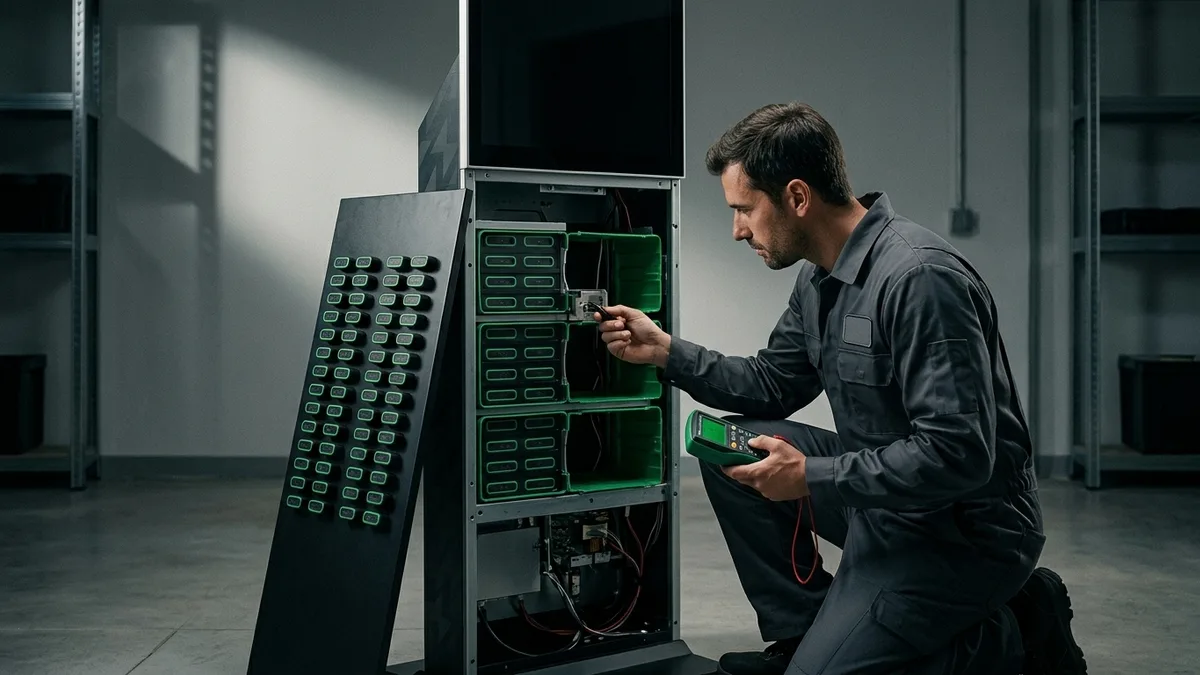
The problem we set out to solve
Charging a phone away from home has always been a makeshift arrangement: asking at the bar, competing for the one wall socket, sitting beside a pillar waiting. Every one of those fixes shares the same flaw — they keep you still.
Chargo starts by inverting that. If the battery is portable, there's no reason the person has to be tied to a fixed point: take one, get on with your day, drop it wherever suits.
How the network works
Every station is a connected node. It knows which units it holds, which are charged and which have gone out. That's what makes open returns possible: the system recognises any battery on the network at any station.
For the venue hosting it, none of that complexity is visible — the station arrives installed and simply runs.
How we grow
A charging network is worth what its density is worth, not its size. Ten stations clustered together are far more useful than ten scattered across a city, because "drop it wherever you like" is only true if there's somewhere to drop it.
So expansion moves area by area: cover a zone with enough points, then move to the next.
The team
[TEAM AND COMPANY BACKGROUND TO BE PROVIDED BY THE CLIENT]